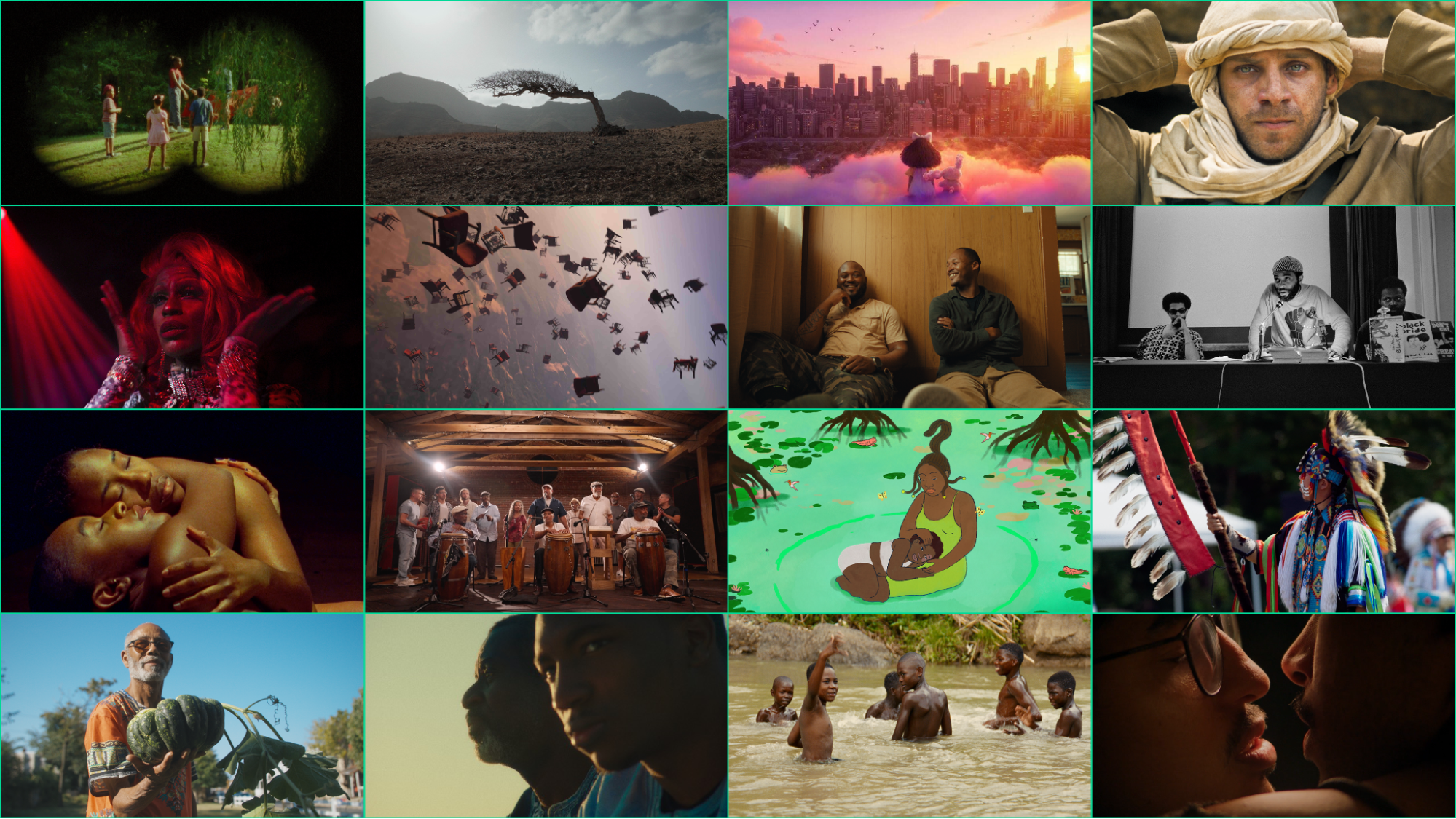
BlackStar Projects, the premier organization celebrating visionary Black, Brown and Indigenous film and media artists, is thrilled to announce the selections for the 2026 BlackStar Film Festival.
This year’s festival will take place from August 6-9, 2026, with in-person film screenings at the Kimmel Center for the Performing Arts, the Wilma Theater and the Suzanne Roberts Theatre. Parties and events will be held at various venues across Philadelphia to mark the 15th annual celebration of the visual and storytelling traditions of Black, Brown and Indigenous people from around the world.
All access passes for the festival are available for purchase here; individual tickets for in-person and virtual screenings will go on sale in early July.
As it celebrates its 15th anniversary, the 2026 BlackStar Film Festival is set to feature a total of 91 films representing over 30 countries, including 22 World, 10 North America, 4 United States, 13 East Coast and 34 Philadelphia premieres. Highlights from this year’s lineup include the North America premiere of Haile Gerima’s Black Lions – Roman Wolves and the world premieres of Dr. Fahamu Pecou’s The Store, Iyabo Kwayana’s Old Man River, Louis Massiah’s Tenants of Lenapehocking in the Age of Magnets, Tananarive Due and Steven Barnes’ The Keeper, and Miryam Charles’ Treasure Island (L’île aux trésors).
“For fifteen years BlackStar has endeavored to bring both new films and a small selection of repertory ones to Philadelphia that not only meet the moment we are in, but deepen our collective understanding of it,” said Festival Director, Nehad Khader. “With this festival lineup we have continued that tradition.”
BlackStar Film Festival has grown in attendance year over year, with more than 20,000 tickets sold in 2025. In addition to this year’s film festival there will be daily panels and conversations with filmmakers and industry leaders, along with an opening night party at Frankie’s Summer Club, a Friday evening concert and celebration at the Barnes Foundation, a Saturday evening industry mixer at Leo and a closing night party at the Barnes Foundation.
“Since our first festival in 2012, BlackStar has blossomed into a complex, challenging and ever-changing celebration of filmmaking and its power to connect us,” said Founder, Maori Karmael Holmes. “We continue to provide a vital and urgent gathering for filmmakers and cinephiles of the global majority, just as we chart new directions forward for the medium, and for all those who are critically engaged with the times in which we live.”
Among BlackStar Projects’ other programs are Seen, a journal of film, art and visual culture, that recently published its tenth issue and the Greaves Filmmaker Seminar, held in March with Stanford University’s Institute for Diversity in the Arts. The organization recently unveiled its new brand identity created by New York-based creative agency Pacific. Through a multi-year process of research and refinement, Pacific developed a new visual identity and system that unifies the various initiatives that exist under the umbrella of BlackStar.
The full lineup of films is below:
66 Days (٦٦ يوماً), directed by Joude Bazzoun
A Bundle of Silences (Un montón de silencios), directed by Sofía Gallisá Muriente
A Different Image, directed by Alile Sharon Larkin
A Life in Art: Through the Eye of Dr. Leslie King Hammond, directed by Ben Baker-Lee and Rassaan Hammond
A Sad and Beautiful World (نجوم الأمل و الألم), directed by Cyril Aris
Aanikoobijigan (ancestor/great-grandparent/great-grandchild), directed by Adam Khalil and Zack Khalil
After What Happened at the Library, directed by Syra McCarthy
An Afternoon with a Gnawa, directed by Meena Nanji
An Impossible Address, directed by Suneil Sanzgiri
An Incomplete Calendar, directed by Sanaz Sohrabi
And She Didn’t Die, directed by Kethiwe Ngcobo
Angels Pull Your Hair, directed by Gabby Beans
Another Day Shall Come (سيجيء يوم آخر), directed by Aida Kaadan
Are You Native?, directed by Victoria Cheyenne
At the Stage When, directed by Ci Shi Ci Ke and Hao Zhou
Authors of the Estate, directed by Abdou Cissé
Becoming Human, directed by Chiet Chea Manusa and Polen Ly
Black Lions – Roman Wolves, directed by Haile Gerima
Black Zombie, directed by Maya Annik Bedward
Boca Vieja, directed by Yovegami Ascona Mora
Bouchra, directed by Meriem Bennani and Orian Barki
Buckskin, directed by Mars Verrone
Call of My Life, directed by Dammy Twitch
Charip: Lightning in the River (Charip: el relámpago del río), directed by GTANW | MULLU TV Gobierno Territorial Autónomo de la Nación Wampís
ChikaBOOM!!, directed by c. Craig Patterson
Communion (Comunhão), directed by Pétala Lopes
Don’t wake the sleeping child (Ne réveillez pas l’enfant qui dort), directed by Kevin Aubert
Ella, directed by Nikki Taylor-Roberts
Enjoy the tropix and have a banana ! (An diw jwi ! On a la banane sous les tropiques !), directed by Kristine Blonbou
Finding Your Laughter, directed by Arlieta Hall and Brittany Alsot
Fists of Mothers, directed by Tchaiko Omawale
For Peace of Mind, directed by Amandla Baraka
Free Joan Little, directed by Yoruba Richen
Free Lyric, directed by Cherish Oteka
Glass Bricks, directed by Simone Holland
God Sleeps on Sundays, directed by Naishe Nyamubaya
HomeGoing, directed by Julie Dash
How to Hide It, directed by Ramla Ali and Richard A. Moore
I Got My Brother, directed by Victor Gabriel
I Wonder Shall I Fly, directed by Harlan Banks
Ish Meets a Mermaid, directed by Jonathan Thunder
Ixquic, directed by Elvis Caj
JESUS IS COMING (to take the Church away), directed by Cameron Clay
Lani B Supreme: Legacy, directed by Sabaah Folayan
Let Them Be Seen, directed by Nolitha Refilwe Mkulisi
Mickey, directed by Dano Garcia
Muoz-Doic Mixtape, directed by Quyen Nguyen-Le
National Seating, directed by Kevin Jerome Everson
No Sunshine in Here (Aqui Não Entra Luz), directed by Karol Maia
Nwanne M Nwaanyị, directed by Chiemeka Offor
Old Man River, directed by Iyabo Kwayana
Olinda’s Golden Arches (Os Arcos Dourados de Olinda), directed by Douglas Henrique
One More Show (ضايل عنا عرض), directed by Mai Saad and Ahmed Al Danaf
Our Bodies Ours, directed by Sonali Gulati and Sanam Sheriff
Palestine ‘36 (فلسطين ٣٦), directed by Annemarie Jacir
Philly Rumba, directed by Melissa Beatriz and Andrés Cisneros
Potato Salad, directed by Kyle Drew
Powwow People, directed by Sky Hopinka
Reading the World (Lendo o Mundo), directed by Catherine Murphy
Remote Views, directed by Alexis McCrimmon
Revival 24, directed by Darryl Daley
Same Water, directed by Martine Granby
Scene Not Heard: Women in Philadelphia Hip Hop, directed by Maori Karmael Holmes
Solace, directed by Rodney Evans
Tell Me When You Get Home, directed by Tshay Meade
Tenants of Lenapehocking in the Age of Magnets, directed by Louis Massiah
The Aura (L’Aura), directed by Fanta Sylla
The Keeper, directed by Tananarive Due and Steven Barnes
The Philadelphia Sensei: Lovett Hines, directed by Donn Thompson Morelli (‘Donn T’)
The Prophet (O Profeta), directed by Ique Langa
The Seeds We Carry, directed by Gabrielle Patterson
The Store, directed by Dr. Fahamu Pecou
The Tropic Sun and His Eyes (Soley Twopikal Ak Pitit Li), directed by Elisee Junior St Preux
To Run is to Return, directed by Precious Wura Alabi
Treasure Island (L’île aux trésors), directed by Miryam Charles
True North, directed by Michèle Stephenson
Variations on a Theme (Variasies op ‘n Tema), directed by Jason Jacobs and Devon Delmar
Vis-à-Vis, directed by Mamadou Yattassaye
Voicemail, directed by Lade Tinubu
Watch Out for the Ghosts, directed by Yvonne Michelle Shirley
We Act Like Children (Abinoojiikaasmin), directed by Evelyn Pakinewatik
We Are Not Dreaming (Não Estamos Sonhando), directed by Ulisses Arthur
We, People of the Islands (Nós, Povo Das Ilhas), directed by Elson Santos and Lara Sousa
West Side Familia, directed by Taylor Hosking
What Will I Become?, directed by Lexie Bean and Logan Rozos
When They’re Gone, directed Ragan Henderson and Lauryn Darden
Whispers of a Burning Scent, directed by Mo Harawe
White Musk, directed by Fatima Wardy
Wholesome, directed by Kimmy Campbell
Wood Street, directed by Caron Creighton
Zenón and the Rebel Boats (Zenón y la flotilla rebelde), directed by Juan C. Dávila Santiago
6/22: This page has been updated to remove the film “If I Go Will They Miss Me” and to add the film “Call of My Life.”
Information on juries, additional programming and events will be announced soon. For more information on the festival and its programs, visit https://www.blackstarprojects.org/festival.
This year’s festival is presented with major support from Open Society Foundations. Other sponsors include Eventive, FotoKem, Visit Philly, Hyperallergic, NEON, Color Congress, Firelight Media, Philadelphia Museum of Art, Pillars Fund, Impact Partners, University of Pennsylvania Department of Cinema & Media Studies and The Gotham Film & Media Institute. Additional supporters include John D. and Catherine T. MacArthur Foundation, City of Philadelphia and Councilmember At-Large Isaiah Thomas, Pennsylvania Department of Community and Economic Development secured by State Senator Nikil Saval and State Representative Rick Krajewski, 188th District.
BlackStar Projects and its year-round programs are generously supported by Bloomberg Philanthropies, Critical Minded, Color Congress, Department of Community and Economic Development, Ford Foundation, John D. and Catherine T. MacArthur Foundation, Mellon Foundation, People’s Media Fund, Perspective Fund, Pop Culture Collaborative, Ruth Foundation for the Arts, Surdna Foundation, Wallace Foundation and William Penn Foundation in addition to its board of directors, community partners and a host of generous individual donors and organizations.
About BlackStar Projects
BlackStar Projects, founded in 2012 by Maori Karmael Holmes as BlackStar Film Festival, creates the spaces and resources needed to uplift the work of Black, Brown and Indigenous artists working outside the confines of genre. Beyond the annual film festival the organization produces year-round programs, including film screenings, exhibitions, a filmmaker seminar, a film production lab and a journal of film, art and visual culture.
These programs provide artists opportunities for viable strategies for collaborations with other artists, audiences, funders and distributors. BlackStar is working towards a liberatory world in which a vast spectrum of Black, Brown and Indigenous experiences is irresistibly celebrated in arts and culture.
